
A common misconception in DeFi is that gas optimization means choosing the lowest fee shown by a wallet. That assumption confuses two different variables: the price paid for block space and the amount of computation a transaction requires. A lower quoted fee may reduce cost, but it can also delay execution, increase exposure to a changing market, or encourage a user to approve a transaction without understanding its permissions. Effective optimization is therefore not a race to the smallest number. It is the disciplined management of cost, timing, transaction design, and security.
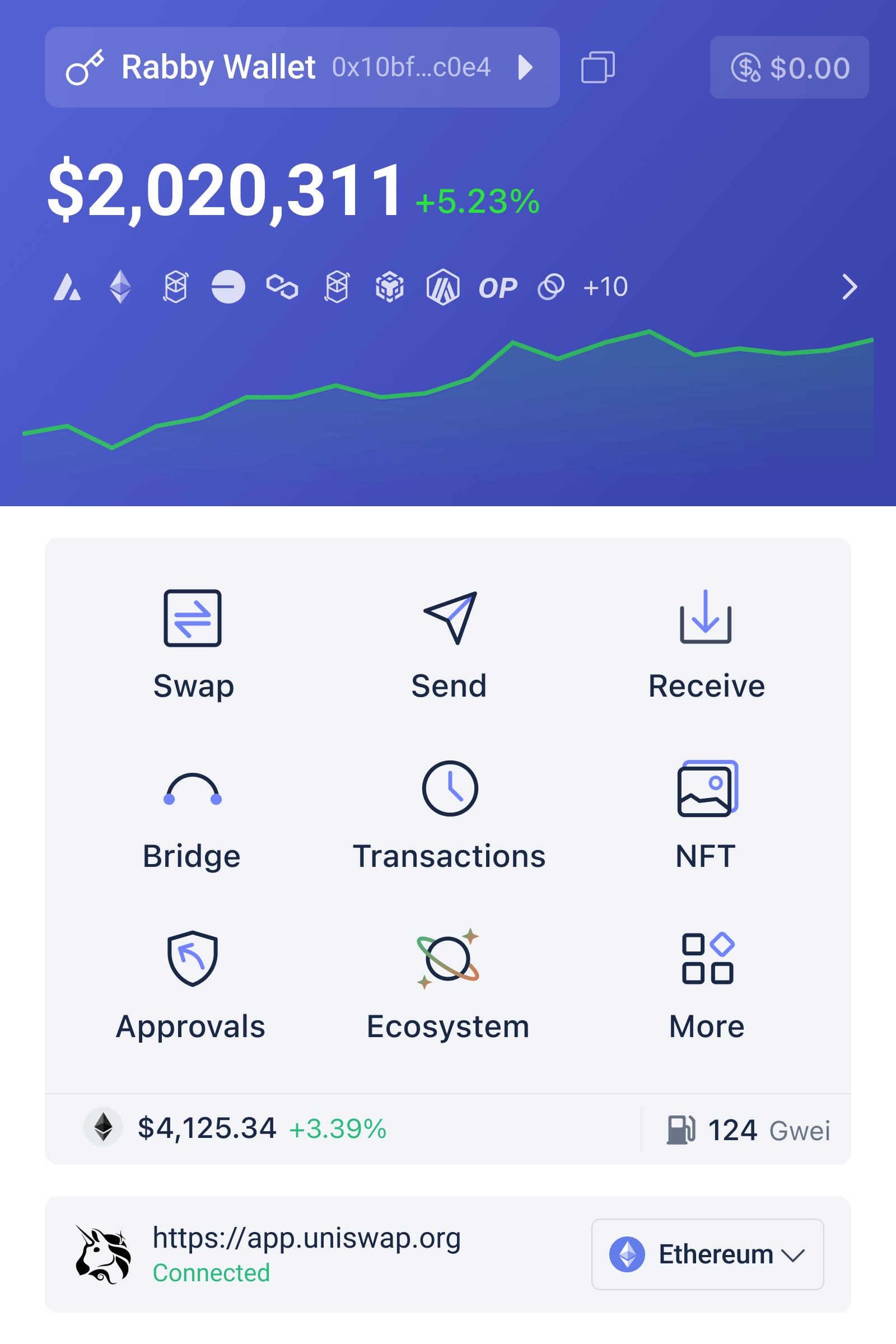
This distinction matters especially for users moving among Ethereum and other EVM-compatible networks in the United States, where a swap, bridge, liquidity deposit, or token approval can involve several separate decisions. A wallet is not merely a place to store assets. It is the interface through which users interpret contract calls, network fees, token allowances, and execution risk. Rabby’s recent project messaging presents the wallet as a broad Ethereum and EVM tool for on-chain activity, but no interface can remove the underlying risks of permissionless smart contracts.
Gas Has More Than One Moving Part
On networks using Ethereum’s modern fee market, a transaction’s effective fee is broadly shaped by a base fee and a user-selected priority fee, often called the tip. The base fee reflects network demand and is determined by the protocol. The priority fee is an incentive for block producers to include the transaction sooner. The transaction also consumes a quantity of computational work, represented by its gas used. In simplified terms, total cost depends on both the unit price of gas and the amount of gas consumed.
This is why “set the gas price lower” is incomplete advice. A token transfer generally requires less computation than a multi-step decentralized exchange transaction. A swap may read pool states, perform token transfers, apply fee logic, and interact with routing contracts. A transaction can therefore be inexpensive per unit but costly in total if it uses substantial gas. Conversely, raising the priority fee may improve inclusion speed without changing the contract’s computational requirements.
The gas limit introduces another important distinction. It is the maximum amount of gas the transaction is allowed to consume, not necessarily the amount ultimately spent. Setting it too low can cause an otherwise valid transaction to fail after consuming resources; setting it higher does not automatically mean the entire limit will be charged. Failed transactions still matter, however, because the network generally charges for the computation performed before failure. “It failed, so it cost nothing” is another persistent DeFi myth.
For practical analysis, separate three questions before confirming: how much computation is likely to be used, how urgently the transaction must be included, and what happens if the transaction executes later than expected. A routine transfer may tolerate slower inclusion. A volatile asset swap may not. A liquidation, arbitrage operation, or expiring opportunity has a different economic threshold altogether. The cheapest transaction is useful only if it remains useful when it lands.
Optimization Begins Before the Confirmation Screen
The largest gas savings often come from transaction design rather than fee bargaining. Users may reduce unnecessary actions by planning a sequence in advance, avoiding duplicate approvals, and choosing a network whose security and liquidity fit the activity. On an EVM network, an approval gives a contract permission to move a token within specified rules. Approvals can prevent repeated authorization prompts, but broad or unlimited allowances create a larger security surface if the approved contract is compromised or misused.
This creates a genuine trade-off. A narrowly limited approval can reduce potential loss, but it may require another approval later and therefore another transaction fee. A broad allowance can be cheaper and more convenient, but it leaves more authority outstanding. Gas optimization should not be measured only in dollars saved today; it should also account for the value of permissions that remain active afterward. Revoking allowances can improve control, yet the revocation itself is an on-chain transaction with its own fee, so timing and asset value matter.
Batching can also be efficient when a protocol or wallet supports it, because several operations may share some transaction overhead. But batching is not automatically safer or cheaper. A complex bundled call can be harder to inspect, and one failed component may affect the whole operation. Users should ask what the contract is actually being asked to do, rather than assuming that fewer confirmation windows means fewer risks.
Network selection is another area where users can make a category error. A lower fee on an alternative EVM chain may be attractive, but cost is only one part of the decision. Liquidity, bridge exposure, contract quality, oracle design, withdrawal conditions, and the network’s operational assumptions also matter. Moving funds to save a small fee can introduce a bridge transaction and a new failure mode. The correct comparison is not “Ethereum versus cheap chain”; it is the total risk-adjusted cost of completing the intended action.
Users preparing to install a browser wallet should obtain the software through a source they can independently verify, then check the extension’s permissions and the network selected before connecting to a DeFi application. Readers seeking the official installation path can review the rabby extension download information, while still verifying the domain, browser listing, and transaction destination themselves. A wallet interface can help organize information, but it cannot make an untrusted website trustworthy.
Why Wallet-Level Security and Gas Efficiency Intersect
Gas decisions can change security outcomes because timing affects what a transaction means when it executes. Suppose a user signs a swap when the displayed price appears acceptable, but delays inclusion by choosing an unusually low priority fee. The market may move, liquidity may change, or the transaction may eventually fail because its slippage tolerance is exceeded. The fee saved may be smaller than the opportunity cost or the loss of a stale execution plan.
Slippage is the difference between the expected and actual execution price. It is not the same as gas. Increasing slippage tolerance can make inclusion more likely, but it gives the trade more room to execute at a worse price. Reducing slippage may protect price quality, but the transaction may fail in a fast market. A sensible user treats gas and slippage as linked timing controls, not interchangeable settings.
Another subtle risk is transaction replacement. If a pending transaction is repriced with a higher fee, the replacement must preserve the intended recipient, contract, value, and calldata. A rushed replacement can be safe only if the user checks the complete transaction again. Speed is not a substitute for review. The same principle applies to network switching: a familiar token symbol or application name does not guarantee that the contract address is the expected one on the selected chain.
Wallet simulations and warnings can be valuable because they translate opaque contract calls into a more readable risk picture. They may highlight expected balance changes, approvals, or suspicious conditions. Yet simulations have boundaries. They are snapshots based on current state and assumptions. State can change between simulation and inclusion; contracts can behave differently under conditions not captured by the preview; and a warning system may not recognize every malicious design. Treat these features as risk-reduction tools, not insurance.
A Reusable Gas-and-Security Framework
A practical framework is to evaluate every DeFi transaction across four dimensions: necessity, authority, timing, and reversibility. Necessity asks whether each operation is required or whether a duplicate approval, unnecessary bridge, or poorly planned sequence can be removed. Authority asks which contract receives permission and for how much. Timing asks whether waiting to save gas could change the market outcome. Reversibility asks what can be undone if the contract behaves unexpectedly.
This framework is more useful than a simple “cheap versus expensive” comparison. A transaction with a modest fee but an unlimited allowance may be economically riskier than a more expensive transaction with tightly bounded permissions. Likewise, a high fee can be rational when delay would invalidate a protective exit, while a high fee for a routine transfer may be unnecessary. The decision depends on the value at risk and the cost of being late.
For US users, tax and record-keeping considerations can add another practical layer. Swaps, liquidity actions, bridges, and transfers may have different reporting implications depending on the facts and applicable guidance. A gas-saving strategy that creates a confusing trail of unnecessary transactions may increase administrative burden even if each individual fee is small. This is not a tax conclusion, but it is a reason to keep transaction purpose and network context clear.
What to Watch as EVM Activity Evolves
If network activity continues to spread across multiple EVM environments, wallet interfaces will likely become more important as decision systems rather than simple signing tools. The useful direction would be clearer comparisons of total transaction cost, permission scope, bridge dependence, and execution uncertainty. Whether those tools can reliably capture every contract-level risk remains an open question, because DeFi protocols can change state and behavior faster than a user can read a warning.
The recent Rabby positioning around Ethereum and EVM coverage is relevant in that context, but broad network support should not be mistaken for uniform safety. Each chain and application still has its own contracts, liquidity conditions, governance assumptions, and failure modes. The forward-looking signal is not that a wallet can eliminate risk. It is that better transaction interpretation may help users make fewer blind decisions as on-chain activity becomes more fragmented.
Frequently Asked Questions
Does paying a higher gas fee make a DeFi transaction safer?
No. A higher priority fee may improve the chance of faster inclusion, but it does not validate the contract, reduce an excessive token allowance, or protect against a malicious website. Safety depends primarily on what the transaction authorizes and how the application behaves.
Is the lowest gas setting always the best option?
No. A low setting can be reasonable for a non-urgent transfer, but delay may be costly for a volatile swap or time-sensitive position. Compare the fee saved with the risk that the market, slippage conditions, or transaction purpose will change before execution.
Should DeFi users revoke every token approval?
Not automatically. Revoking can reduce the authority left with a contract, but it requires another on-chain transaction and may add friction for a protocol the user intentionally continues to use. Review approvals according to contract trust, allowance size, asset value, and future need.
Gas optimization is best understood as controlled execution, not fee minimization. The sharper question is not “How can I pay less?” but “What combination of cost, speed, permission, and network choice gives this transaction an acceptable risk-adjusted outcome?” That mental model remains useful whether the user is transferring tokens, swapping assets, or installing a wallet for the first time.

Leave A Comment