
A wallet can make a transaction look simple while the underlying operation remains highly complex. That is the counterintuitive problem at the center of cross-chain DeFi: the easier a swap appears, the easier it may be to overlook the networks, contracts, approvals, fees, and trust assumptions involved. For US users, where a failed transaction can also mean an expensive gas loss or a difficult tax record, installing a browser wallet is not merely a convenience decision. It is the beginning of a security process.
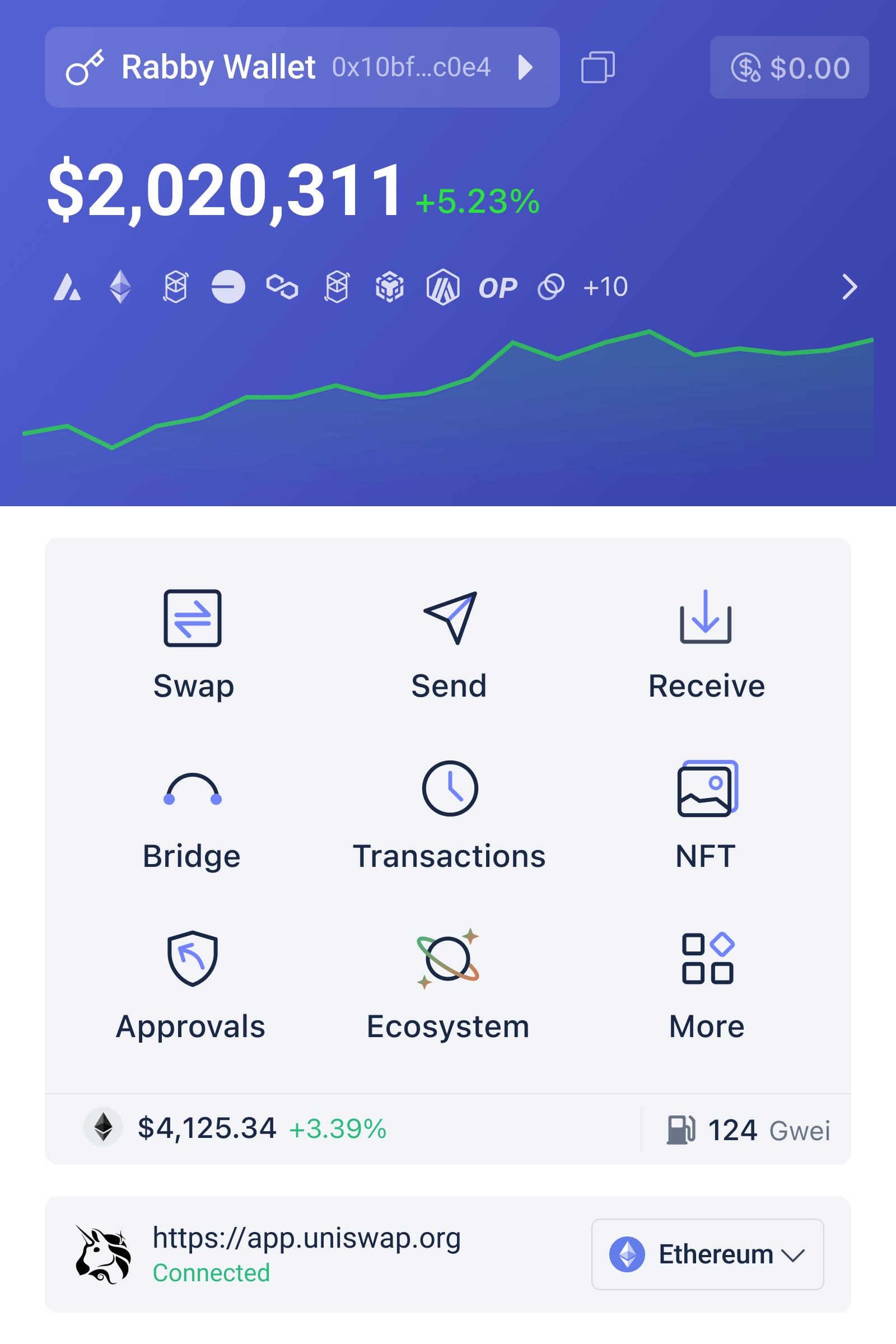
Rabby is best understood not as a guarantee against loss, but as an interface intended to help users inspect and execute activity across supported blockchain networks. Its value depends on what the user verifies, which permissions are granted, and how the swap route is constructed. A careful rabby wallet extension download should therefore be treated as one step in a broader operating discipline: verify the source, protect the signing device, review transaction details, and maintain a clear boundary between convenience and trust.
Why cross-chain swaps are harder than ordinary swaps
A conventional decentralized exchange swap usually involves one blockchain, a wallet signature, and one or more smart-contract calls. A cross-chain swap adds another system boundary. The user may begin with an asset on one network and finish with a different asset on another, often through a bridge, a liquidity network, an intermediary service, or a combination of these mechanisms.
The important distinction is that a cross-chain swap is not always a single atomic event. “Atomic” means that either the complete operation occurs or it does not. Across separate blockchains, that guarantee is difficult to provide. A route can succeed on the source chain while becoming delayed, repriced, or interrupted before the destination asset is delivered. The interface may present one polished workflow, but underneath it may depend on multiple confirmations, relayers, liquidity pools, and contracts.
This creates a useful mental model: evaluate the route, not just the quoted exchange rate. A low displayed fee may coexist with bridge risk, slippage, delayed settlement, or an unfavorable price on the destination chain. Conversely, a route with a somewhat higher fee may reduce the number of assumptions or use deeper liquidity. The cheapest visible option is not necessarily the lowest-cost option after failed transactions, price movement, and operational risk are included.
Before approving a cross-chain transaction, a user should identify four elements: the chain where funds currently reside, the chain where the result will arrive, the contract or service receiving the funds, and the asset expected at the end. Confusing a native token with a wrapped representation is a common source of error. An asset with a familiar ticker may have different contract addresses and liquidity conditions on different networks.
What a browser wallet can and cannot protect
A browser wallet acts as a signing interface. It may display network information, transaction requests, token approvals, estimated fees, and contract interactions in a more understandable form than raw hexadecimal data. That visibility can help users notice a mismatch between their intention and the transaction being requested.
Yet interpretation is not the same as prevention. A wallet cannot make a malicious website legitimate, turn a dishonest token into a safe one, or recover funds sent to the wrong address. If a user approves an unlimited token allowance to a compromised contract, the wallet may have shown the permission clearly, but the final decision still rests with the signer. Security tools reduce certain classes of mistakes; they do not remove the need for judgment.
This boundary matters because many wallet users rely on familiar visual cues. A known token name, a polished website, or a successful previous transaction does not prove that the current contract is safe. Attackers can imitate brands, create look-alike domains, distribute counterfeit tokens, and use urgent messages to push a user past the review stage. In practical terms, the browser wallet should be treated like an aircraft instrument panel: valuable for situational awareness, but not a substitute for confirming the flight plan.
The approval problem
Token approvals deserve special attention. A swap often requires a user to authorize a smart contract to spend a particular token on the user’s behalf. That approval can be limited to the exact amount needed, or it can be broader. Broad approvals reduce friction for future transactions, but they also increase the potential exposure if the approved contract is later exploited or used maliciously.
The trade-off is therefore between convenience and containment. Conservative users may prefer smaller allowances and periodic permission reviews, accepting extra transactions and additional gas costs. Active traders may accept wider approvals, but should understand that the convenience is purchased with a larger permission surface. Neither approach is risk-free, and the right choice depends on transaction frequency, wallet balances, and the user’s ability to monitor permissions.
Comparing practical approaches to cross-chain activity
There is no universally superior route. A native cross-chain protocol may offer a streamlined experience and competitive execution, but introduces dependence on its contracts, validators, relayers, or liquidity model. A centralized exchange can be operationally simpler: a user deposits on one network and withdraws on another. That approach may reduce direct interaction with bridges, yet it replaces smart-contract exposure with custodial, account, compliance, and withdrawal risks.
A third option is to use a decentralized exchange separately on each network. The user might bridge funds first and then perform a local swap. This can make the sequence easier to inspect because each step is distinct. The cost is complexity: more transactions, more opportunities for a wrong network selection, and potentially more gas. It may be suitable for users who value transparency over a one-click workflow.
These alternatives illustrate a broader principle: security is not a single score. It is a bundle of exposures. A route can be strong on custody but weak on smart-contract complexity; another can be transparent but operationally cumbersome. When comparing options, ask which risk has moved rather than assuming it has disappeared.
A safer installation and transaction routine
Start with the installation source. Use a trusted, independently verified route rather than a sponsored search result, unsolicited message, or link posted in a chat. Check the spelling of the domain and avoid installing multiple wallet extensions that could confuse account selection or network prompts. A new wallet should be created with a recovery phrase handled offline; that phrase should never be entered into a website, support form, or online document.
Separate funds by purpose. A hardware wallet or other long-term storage arrangement may be more appropriate for substantial holdings, while a browser wallet can be used for a smaller operational balance. This arrangement does not eliminate risk, but it limits the amount exposed to a compromised site or mistaken approval. A useful rule is to assume that the wallet used for experimentation could eventually encounter a hostile contract.
Before signing, pause at the point where the wallet presents the transaction. Confirm the network, recipient or contract, token amounts, fee estimate, slippage settings, and any approval request. For a cross-chain swap, also confirm the destination network and the exact asset expected there. If the result depends on a bridge or intermediary, determine what happens if the source transaction confirms but the destination step is delayed.
Perform a small test transaction when the route is unfamiliar. This is not a guarantee, and it adds cost, but it can reveal wrong-network assumptions, unsupported assets, or unexpected delivery behavior before a larger balance is involved. Afterward, record the transaction identifiers and review the resulting balances on the relevant network explorers. Good records are especially useful for US users managing portfolio accounting, cost basis, and taxable activity, although tax treatment depends on individual circumstances.
What to watch as cross-chain systems mature
The most meaningful progress will not simply be faster swaps. It will be clearer visibility into how a route works, fewer hidden permissions, better handling of failed or delayed settlement, and more intelligible warnings. If interfaces increasingly show the complete path rather than only the final quote, users may make better decisions. That outcome is conditional, however: clearer information helps only when users stop to read it and when the underlying data is accurate.
Users should also watch how liquidity is distributed across networks. A route that works smoothly during normal market conditions may behave differently during volatility, congestion, or a sharp change in demand. Slippage can widen, bridge delays can become more consequential, and a destination token may be harder to sell than expected. The operational lesson is simple: test the route in the conditions in which you may actually need it, not only when markets are calm.
Frequently asked questions
Does installing a browser wallet make cross-chain swaps safe?
No. A wallet can improve transaction visibility and help users review signing requests, but it cannot guarantee the safety of a website, bridge, token, or smart contract. Users remain responsible for checking the route, permissions, network, and destination asset.
Why can a cross-chain swap fail after the first transaction succeeds?
Separate blockchains do not share one universal transaction state. The source-chain transfer may confirm while a relayer, bridge, liquidity provider, or destination contract is delayed or unable to complete the next step. This is why users should understand the recovery process before committing significant funds.
Should token approvals be revoked after every swap?
Not necessarily. Revoking approvals can reduce ongoing exposure, but it requires another transaction and may create additional fees. The practical choice depends on the contract, the amount approved, the value held in the wallet, and how frequently the user interacts with that protocol. Smaller approvals and periodic reviews provide a compromise between control and convenience.
The central lesson is easy to state but often missed: a wallet is a decision interface, not a safety substitute. Cross-chain swaps concentrate complexity behind a simple button, so responsible use means making the hidden assumptions visible before signing. Download carefully, isolate meaningful balances, inspect approvals, and compare routes by their total risk rather than their headline price. Convenience is useful in DeFi, but only when the user can still see what convenience has concealed.

Leave A Comment